

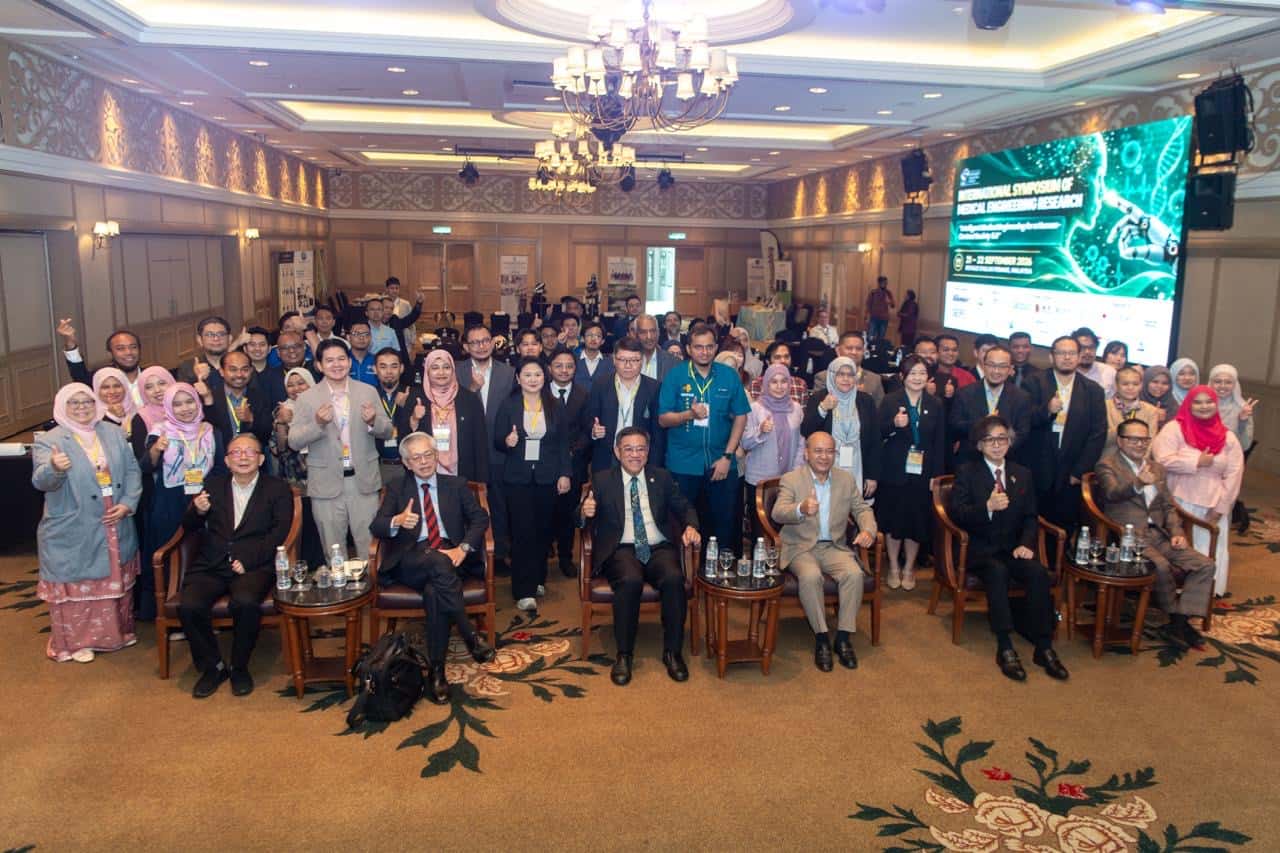

MEDICAL engineering can create new and exciting opportunities for Penang by bringing together the strengths of engineering, healthcare, manufacturing and research, says state Tourism and Creative Economy Committee chairman Wong Hon Wai.
Wong said Penang, with more than 1,000 companies across the medical, engineering and related technology sectors, has a strong foundation for closer collaboration between academia and industry.
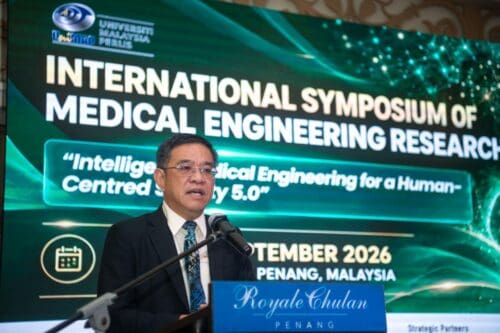
“By bringing an engineering mindset into the medical and healthcare field, we can develop better technologies, smarter medical devices and innovative solutions that respond to real healthcare needs.
“More importantly, the convergence of engineering, healthcare, manufacturing and research can open new pathways for talent development, technology transfer, commercialisation and future investment in Penang,” he said.
Wong said this in his speech before officiating the opening of the International Symposium on Medical Engineering Research (ISoMER 2026), organised by the Universiti Malaysia Perlis (UniMAP) Sports Engineering Research Centre (SERC) at the Royale Chulan Penang Hotel in Weld Quay today.
Also present was UniMAP vice-chancellor Datuk Prof Dr Zaliman Sauli.
Wong said the intersection between engineering and healthcare would become increasingly important to Penang’s future growth, while symposiums such as ISoMER provide an important platform to strengthen the ecosystem.
“As we look towards the future, the growing complexity of healthcare challenges from an ageing population and emerging diseases to rising costs and the demand for personalised and accessible care requires us to think differently.
“Medical engineering has an important role to play, but these challenges cannot be addressed by any single university, industry, country or discipline.
“The future of healthcare innovation depends on collaboration between engineers and doctors, universities and industry, researchers and entrepreneurs, and countries,” he said.
Wong also expressed hope that ISoMER 2026 would serve as a catalyst for such collaboration, bringing together expertise and ideas from different fields to advance medical engineering research and innovation.
“May the discussions held here generate new ideas, strengthen existing partnerships and inspire the next generation of researchers and innovators in medical engineering,” he said.
ISoMER 2026 covers a wide range of key areas, including biomedical devices and bioinstrumentation, artificial intelligence in healthcare, medical robotics, biomaterials and tissue engineering, biomechanics and rehabilitation, biomedical signal and image processing, biotechnology, bioinformatics and the Internet of Things (IoT) in healthcare.
Beyond research presentations, the symposium also serves as a platform to strengthen collaboration among academia, industry, healthcare stakeholders and government agencies, while supporting the growth of Malaysia’s biomedical engineering, medical device and MedTech ecosystem.
Through international knowledge exchange and stronger industry-academia partnerships, ISoMER 2026 aims to accelerate the translation of medical engineering research and innovation into practical technologies that can contribute to better healthcare outcomes and benefit society.
Story by Riadz Akmal
Pix by Siew Chia En