

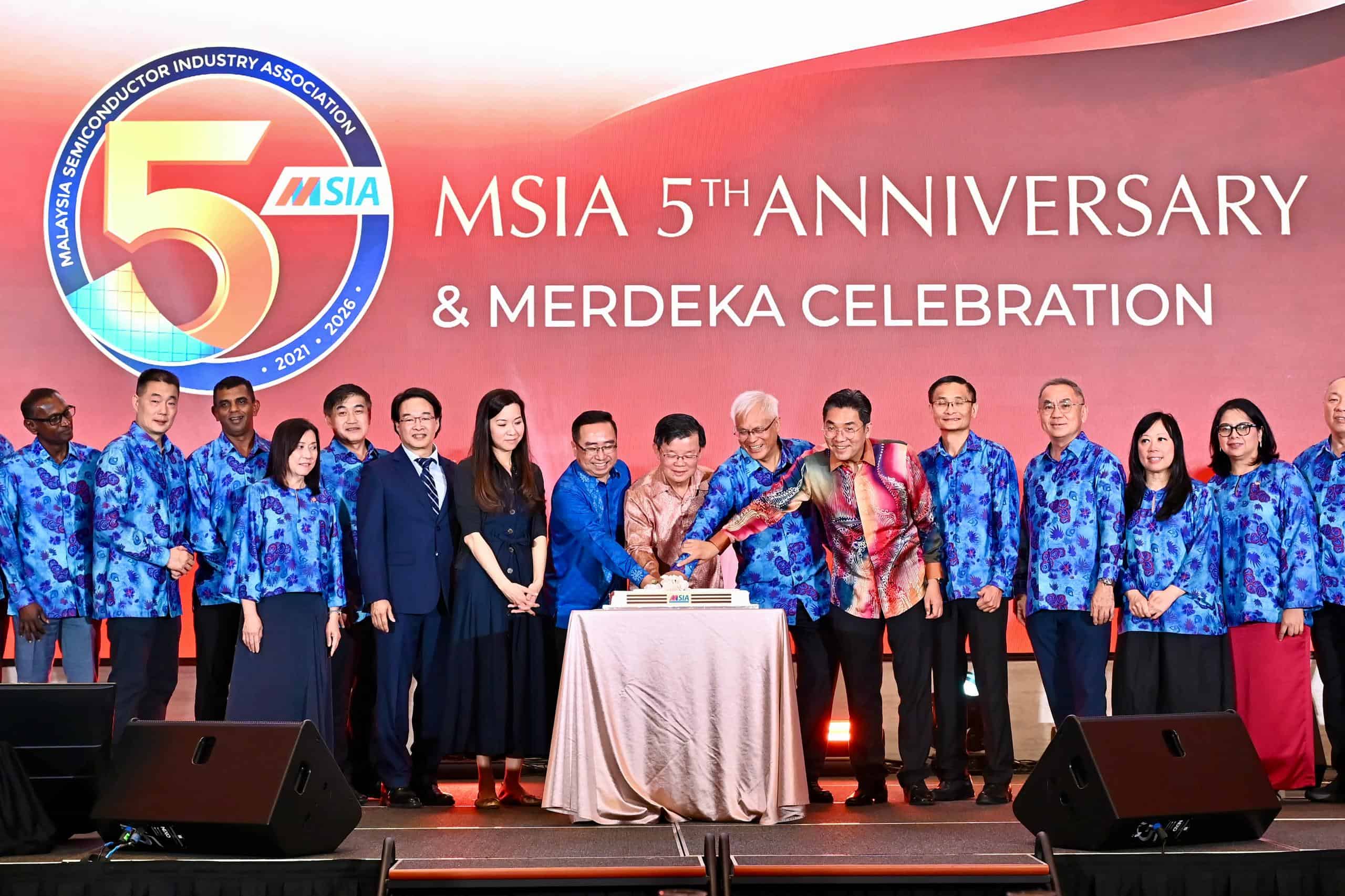

PENANG must build on its strong semiconductor and electrical and electronics (E&E) ecosystem by developing more homegrown companies capable of designing products, owning intellectual property (IP), developing technologies and competing globally, said Chief Minister Chow Kon Yeow.
He said Penang’s success in attracting global companies and establishing itself as an important manufacturing base should now be complemented by efforts to strengthen Malaysian capabilities and move local companies higher up the value chain.
“We have been successful in attracting global companies and becoming an important manufacturing base. Now, we must build more Malaysian companies that design products, own intellectual property, develop technologies and compete globally,” he said during the Malaysia Semiconductor Industry Association (MSIA) 5th Anniversary & Merdeka Celebration at Iconic Marjorie Penang tonight.
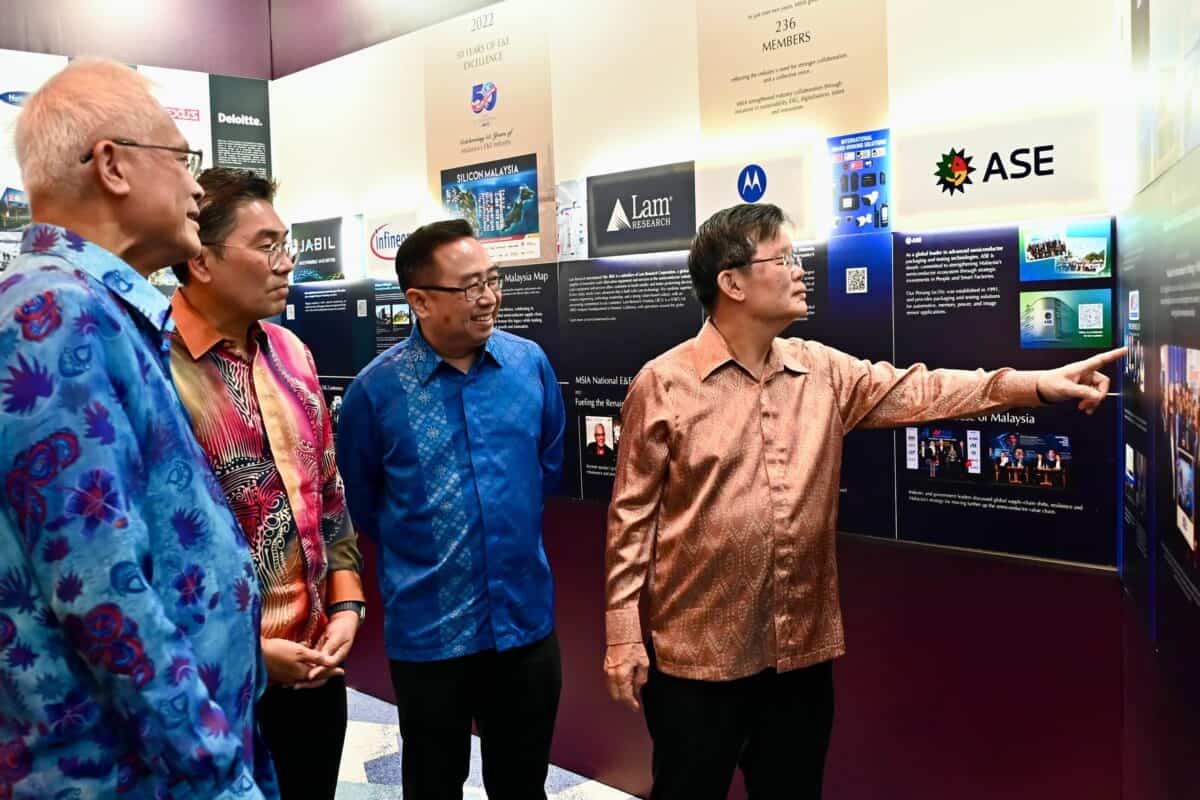
Chow congratulated the MSIA on its fifth anniversary, particularly for becoming a strong voice for the semiconductor sector.
“I also want to take this opportunity to call on MSIA to support the Penang State Government’s recent initiative to set up the Penang International Financial Centre, leveraging on the strength of our technology and semiconductor sectors,” he said.
“We have taken a baby step, and I hope our Minister of Science, Technology and Innovation (MOSTI), Datuk Chang Lih Kang, will also help us to raise this matter in the Cabinet and to impress upon the Prime Minister to continue supporting the industry by allowing and looking into how a Penang International Financial Centre or a Penang Technology Financial Centre will help our industry to grow into world champions in the very near future.”
“MSIA, our Minister, the State Government — let us become one voice in championing this important initiative for the future of Penang and for the future of Malaysia,” Chow urged.
That, Chow stressed, is the ethos that should be carried forward for MSIA, Penang and Malaysia in the next five years after completing its first five years.
Penang’s semiconductor and E&E industry has been central to the state’s economic development for more than five decades, while the industry is now undergoing rapid changes driven by artificial intelligence, advanced packaging, chip design, supply-chain shifts and geopolitical developments.
Chow said Penang must move with these changes and continue strengthening its capabilities in higher-value activities.
He said initiatives such as Penang Silicon Design @5KM+ and the Penang ATE Campus were aimed at strengthening the state’s capabilities in integrated circuit design, automation, testing and equipment.
Chow said the next phase of growth should see Malaysian small and medium enterprises (SMEs) becoming global suppliers, Malaysian engineers designing technologies, and Malaysian companies growing into regional and international champions.
However, he stressed that this could only be achieved by building an ecosystem that allowed Malaysian companies and talent to thrive.
“This means connecting industry, government and universities; improving access to financing; strengthening R&D and commercialisation; developing talent; and creating stronger links between Malaysian SMEs and multinational companies,” he said.
Chow said the Government alone could not build such an ecosystem, stressing that industry and universities must also play their respective roles.
“The Government cannot build this ecosystem alone. Industry cannot do it alone. Universities cannot do it alone. We need all parts of the ecosystem working together,” he said.
He said the “Made by Malaysia” concept should be more than a slogan, describing it as an ethos for the country’s next phase of growth.
“We want Malaysian SMEs to become global suppliers, Malaysian engineers to design technologies, and Malaysian companies to grow into regional and international champions,” he said.
Also present were Minister of Science, Technology and Innovation (MOSTI) Datuk Chang Lih Kang, Deputy Minister of Investment, Trade and Industry (MITI) Sim Tze Tzin and MSIA president Datuk Seri Wong Siew Hai.
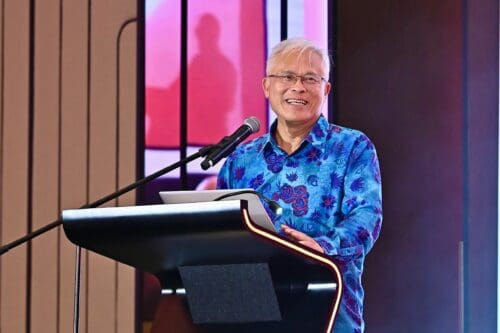
Wong said the semiconductor industry has always operated under uncertainties and challenges, from the Covid-19 crisis to geopolitical tensions, the Middle East crisis, multiple tariff changes and their aftermath.
He congratulated members for their resilience, determination and unwavering commitment to keeping the industry moving forward.
“There were people who chose not to give up. Five years of MSIA and today, I am proud of how far we have come,” he said.
“We have grown by leaps and bounds. From 68 members and a six-member Protem Committee in 2021, we now stand at 378 members in 2026, and we are still growing,” he said.
He also highlighted several companies that had made it to Bursa Malaysia’s ACE Market and Main Market. Sixteen of them were recognised at the celebration for driving innovation.
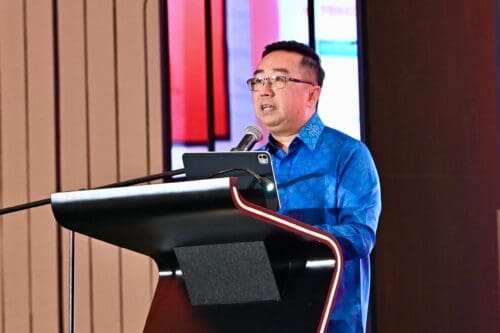
Chang said MOSTI, through the Malaysia Science Endowment (MSE), is supporting five Malaysian companies to accelerate technology development in semiconductor-related areas, with a particular focus on advanced packaging and IC design.
He said the objective is not simply to fund research, but to help build local technological capabilities that could eventually be commercialised, scaled and integrated into the global semiconductor supply chain.
“This collaborative model can help Malaysia build stronger capabilities across the advanced packaging value chain while creating greater opportunities for Malaysian companies and talent to participate in higher-value activities,” he said.
“At the same time, we need to build the next generation of Malaysian semiconductor companies. Through SemiconStart Malaysia, MOSTI, through the Malaysian Technology Development Corporation (MTDC), is providing support of up to RM35 million to accelerate promising semiconductor companies in areas such as chip design, advanced materials and emerging semiconductor technologies,” he said.
He said the funding might not be much to a large corporation, but could provide valuable assistance to promising companies as they navigate the difficult journey of growth.
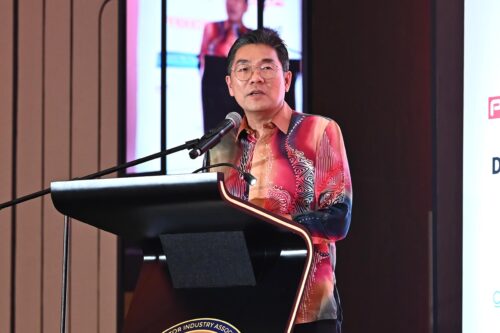
Sim said since 2023, when Datuk Seri Anwar Ibrahim became Prime Minister, he has been working hard, travelling extensively to invite investors and promote Malaysia, with efforts bearing fruit and producing results.
He said Malaysia had broken records in total investment for the past three years.
“From 2023 to 2025, our country has welcomed RM1.14 trillion in total investment. And this year, as of June, we’ve successfully attracted RM91.9 billion in approved investment in the semiconductor industry itself,” Sim said.
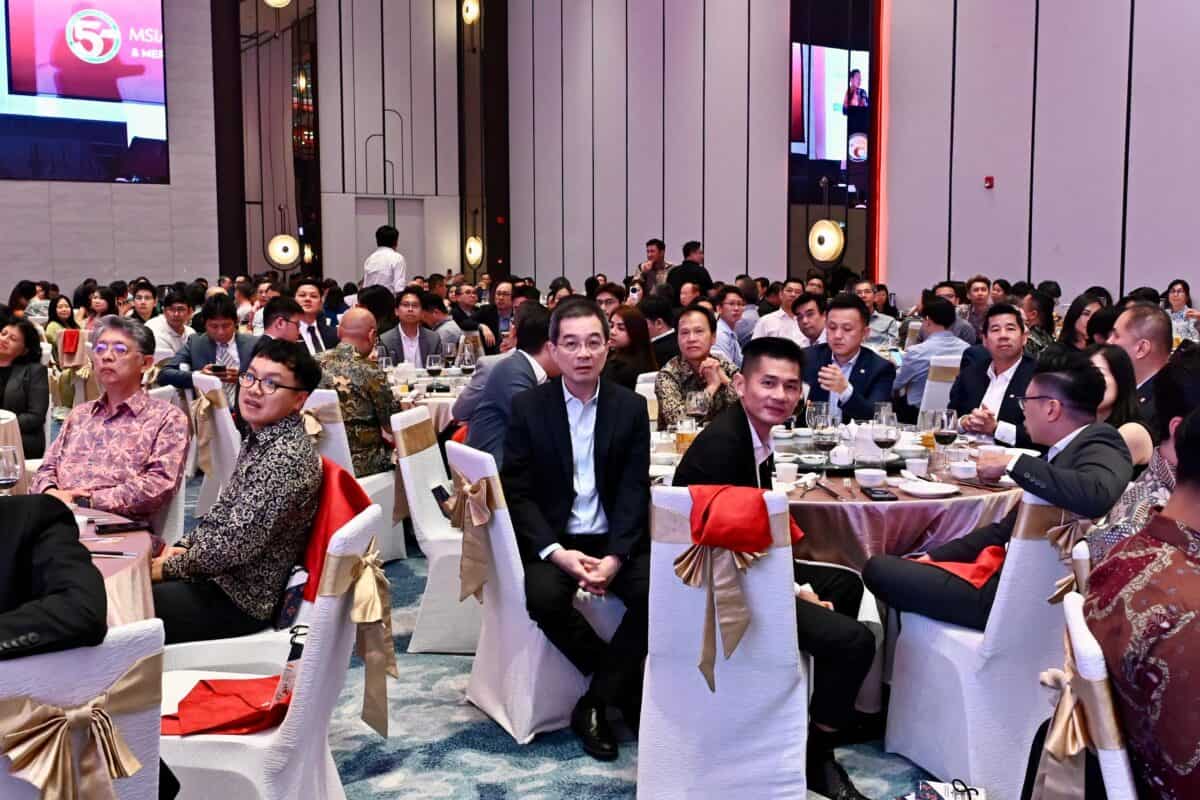
For many of the 700 attendees, including members of the diplomatic corps, distinguished guests and captains of industry, the anniversary celebration was also an opportunity to let their hair down and celebrate five years of achievements by MSIA and 69 years of the nation’s independence.
Story by K.H. Ong
Pix by Sit Nuratikah Rahmat