

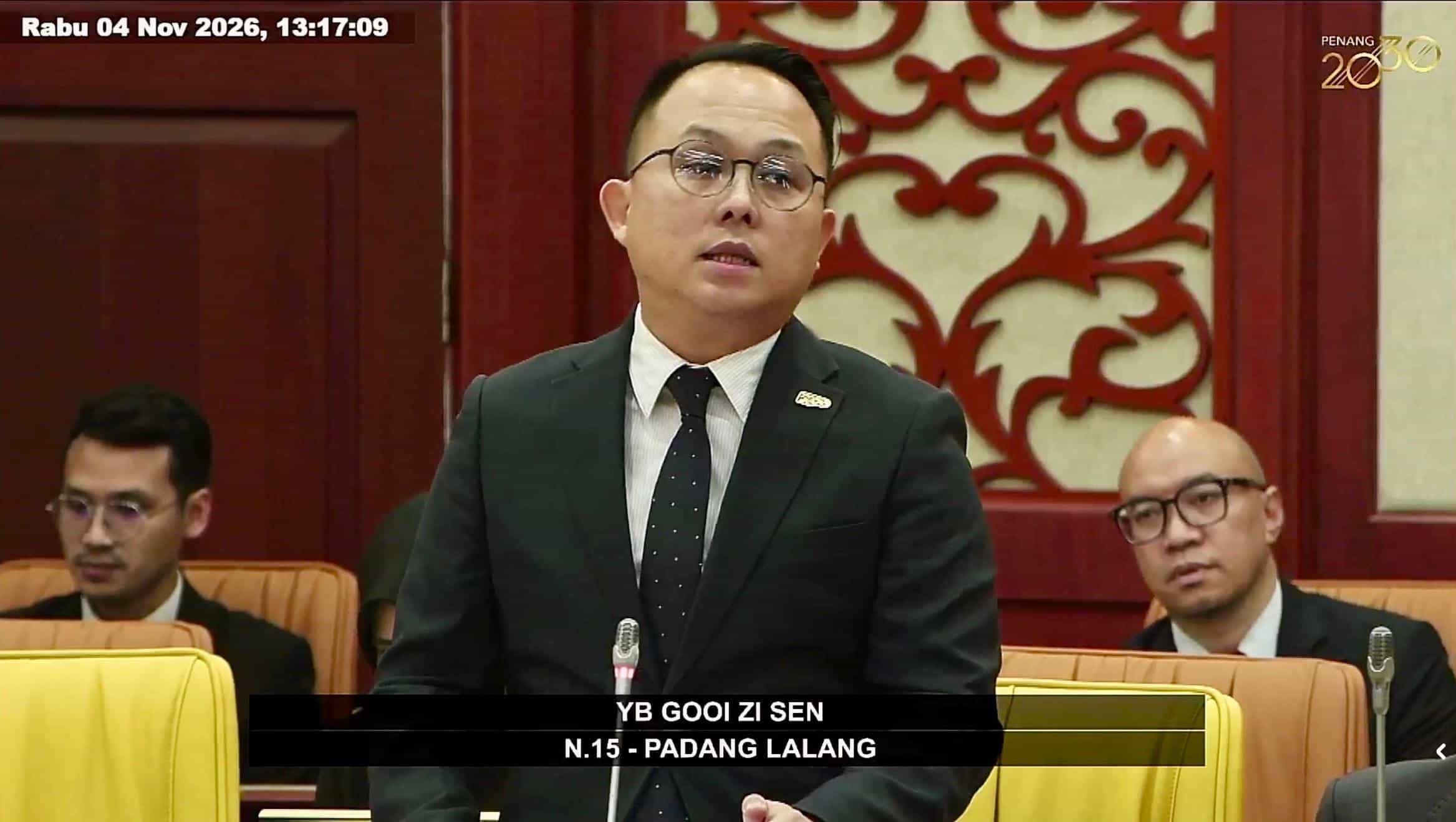

PENANG is stepping up efforts to strengthen youth development, improve sporting performance and enhance public healthcare services under the 2027 state budget, with a focus on addressing key challenges and translating development plans into tangible benefits for the people.
Speaking during his winding-up speech at the Penang Legislative Assembly, state Youth, Sports and Health Committee chairman Daniel Gooi Zi Sen (PH-Padang Lalang) outlined the state government’s efforts to develop its younger generation through the Penang State Youth Development Framework, developed by the Penang Youth Development Corporation (PYDC).
“Young people require a clear direction, not merely rhetorical promises,” he said.
The framework addresses challenges such as the rising cost of living, skills mismatches, mental well-being and unequal opportunities through three pillars: character building, healthy lifestyles, and talent discovery and development to strengthen youth leadership, employability and talent retention in Penang.
Among the notable achievements this year were two Penang representatives receiving recognition at the 2026 National-Level Prime Minister’s Youth Awards (APBN) on Sept 14.
Gooi said the framework aims to move youth development beyond conventional programmes through a more strategic approach that strengthens young people’s leadership, employability and ability to contribute to Penang’s development.
“The ultimate goal is to cultivate a generation of Penang youth who are resilient, competitive, and capable of making meaningful contributions to the state’s development, in line with the Penang2030 vision,” he said.
On sports, Gooi highlighted Penang’s performance at the 2026 Malaysia Games (Sukma), where the state secured 156 medals, including 39 gold, and reached 94 finals, despite having initially set a target of 60 gold medals.
“The total haul of 156 medals demonstrates that Penang’s athletes remain competitive and possess the capability to reach the podium,” he said.
Looking ahead, Gooi said improvements in athlete preparation, sports science support, competition management and medal-prospect analysis would be prioritised to help Penang convert more podium finishes into gold medals at the 2028 Sukma.
“Our task now is to identify why some of these performances did not translate into gold medals, and subsequently, to determine the interventions that will yield the most significant impact.
“A strategic shift for the 2028 Sukma must focus on enhancing performance quality, analysing medal prospects, improving athlete preparation for competition, strengthening sports science support, and refining competition management,” he said.
Penang also secured 37 medals at the 2026 Para Sukma, with Gooi emphasising that progress should be measured not only by medal counts but also by athlete development, training effectiveness and opportunities for emerging talent.
Meanwhile, Penang is set to host six sporting disciplines at the 2027 SEA Games: boxing, snooker and billiards, table tennis, judo, sepak takraw and floorball.
Venues being assessed for the competitions include the Penang Waterfront Convention Centre (PWCC), SPICE Arena and Setia SPICE Convention Centre in Bayan Baru.
Gooi stressed that hosting the SEA Games would involve more than providing suitable venues, as Penang must also demonstrate its ability to manage an international sporting event professionally through proper planning, coordination and operational readiness.
“The success of hosting cannot be measured solely by whether the competitions take place. We must ensure that every competition adheres to the rules, every venue is fully prepared, all technical requirements are met, and every party understands their respective responsibilities,” he said.
On healthcare, Gooi highlighted hospital congestion, shortages of medical specialists and the need to strengthen healthcare infrastructure to meet growing public demand.
Under Rolling Plan 2 (RP2) of the 13th Malaysia Plan, eight healthcare projects have been approved with a total allocation of RM59 million.
These include RM50 million for a new Type 1 health clinic in Butterworth and RM3.5 million to upgrade the standby generator system at Penang Hospital (HPP), while the remaining RM5.5 million is allocated for other approved healthcare projects.
Gooi also outlined hospital expansion plans, land approvals and infrastructure improvements to address capacity constraints, as hospitals and clinics continue to face high patient numbers and long waiting times.
“Not only do we make sure that the number of people in HPP is enough, but also the number of patients who come to the hospital is enough for the whole country and the whole region,” he said.
Gooi would emphasise the importance of translating Penang’s development vision into tangible benefits for the people through investment in youth, stronger sporting performance and improved public healthcare services.
Story by Ammar Mikhail Aamer