

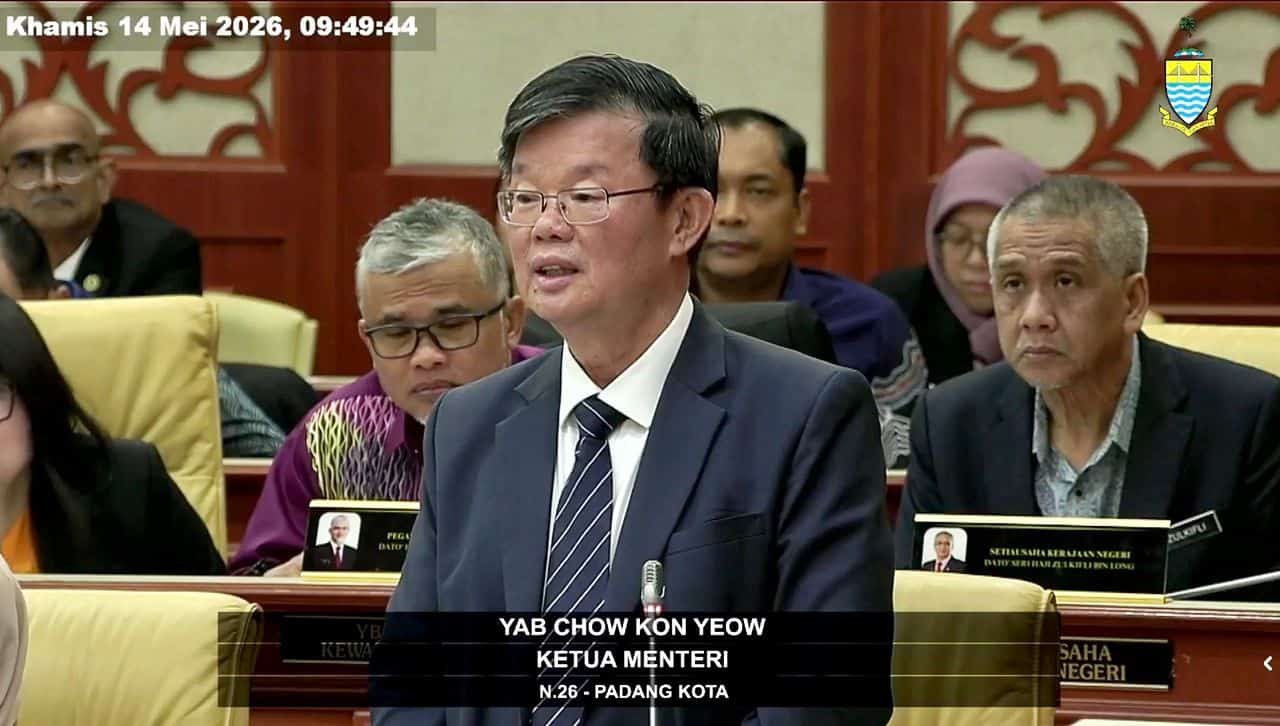

PENANG is stepping up efforts to diversify and future-proof its revenue streams, while continuing to advocate for a more balanced federal-state revenue sharing model to support long-term growth, Chief Minister Chow Kon Yeow told the State Legislative Assembly today.
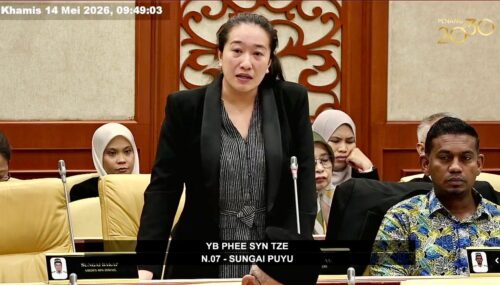
Responding to an oral question by Phee Syn Tze (PH – Sungai Puyu), Chow (PH – Padang Kota) stressed that the state is focusing on efficiency, asset optimisation and economic growth to ensure long-term fiscal resilience.
He said the state has adopted “a holistic, integrated and focused approach on strengthening internal sources and improving financial management efficiency.”
Among the strategic measures outlined, Chow said the state is “improving the efficiency of existing revenue collection through enhancements to collection systems and enforcement against arrears.”
He added that the government is also “optimising the use of state-owned assets through disposal, leasing and redevelopment of non-productive assets to generate higher returns.”
Chow said Penang will continue “empowering high value-added economic sectors by encouraging strategic investments, particularly in high-technology manufacturing, modern services and tourism.”
He stressed that the state is “diversifying revenue sources prudently without involving sudden increases in taxes or service charges.”
To strengthen fiscal governance, Chow said the state is implementing “zero-based budgeting (ZBB), high-impact expenditure, integrated financial performance monitoring, and strengthening transparency and accountability through periodic audits and reporting.”
“This approach is not only aimed at increasing state revenue in the short term, but also at building a more resilient, inclusive and sustainable financial foundation in the long term, with the wellbeing of the rakyat remaining the state government’s top priority,” he said.
On the role of government-linked companies (GLCs), Chow said they act as catalysts for economic development through strategic projects and infrastructure.
“Although GLCs do not function as direct revenue contributors in the form of tax collection, their role is significant in generating economic value that indirectly contributes to increased state revenue,” he said.
He highlighted the role of the Chief Minister Incorporated (CMI) in directly generating income through asset management.
“This includes rental collection, lease returns and the implementation of Request for Proposal (RFP) methods to maximise the value of strategic state assets in a competitive and transparent manner,” Chow said.
He revealed that CMI contributed RM6.41 million to the state government in 2024, with the total rising to RM54.2 million in 2025, including proceeds from the land RFP.
“Overall, the role of GLCs complements the state government’s policies in strengthening the state’s economic and financial foundations sustainably without compromising the wellbeing of the rakyat,” he added.
During the supplementary exchange, Chow highlighted the importance of strengthening federal-state cooperation to ensure sustainable revenue growth.
He said state revenue “comprises tax revenue, non-tax revenue and non-revenue receipts,” noting that land tax collection currently amounts to “around RM130 million.”
He added that a major contributor comes from non-tax sources, including land premiums from disposal, lease extensions and land-use matters.
“We cannot deny that the disposal of reclaimed land is a major financial source for the Penang government, and I want to keep moving forward. If this source runs out, there will be the challenge of replacing it with other sources,” he said.
Chow noted that land tax reviews would only increase revenue by about RM50 million after exemptions and rebates.
“So how long can we sustain this? We will sustain it until we cannot sustain it,” he said.
He revealed that several states have jointly appealed for a share of federal revenue.
“There are states requesting the federal government to share 20%, 30%, 25% or even 40%, subject to federal agreement. If states are strong and stable, our country will be strong.
“If all resources are centralised at the federal level, this situation will continue to affect states across the Federation of Malaysia,” he added.
Chow pointed out that Penang does not have petroleum resources like Sarawak or special revenue arrangements like Sabah.
“We still need to rely on human-generated revenue.
“As long as revenue sharing with the federal government is not mandated, we need to strengthen the voices of states to ensure the federal government hears us,” he said.
Story by Kevin Vimal
Pix by Alissala Thian